

In the automation systems we build in the field, everyone first looks at the PLC, the switch, or the software. But the real unsung hero is usually the power supply. Sudden voltage fluctuations, short outages, or harmonics in the grid are what damage PLCs, sensors, and safety equipment the most. Then we start hearing the classic complaints: “PLC reset itself, communication dropped, the system won’t start.”
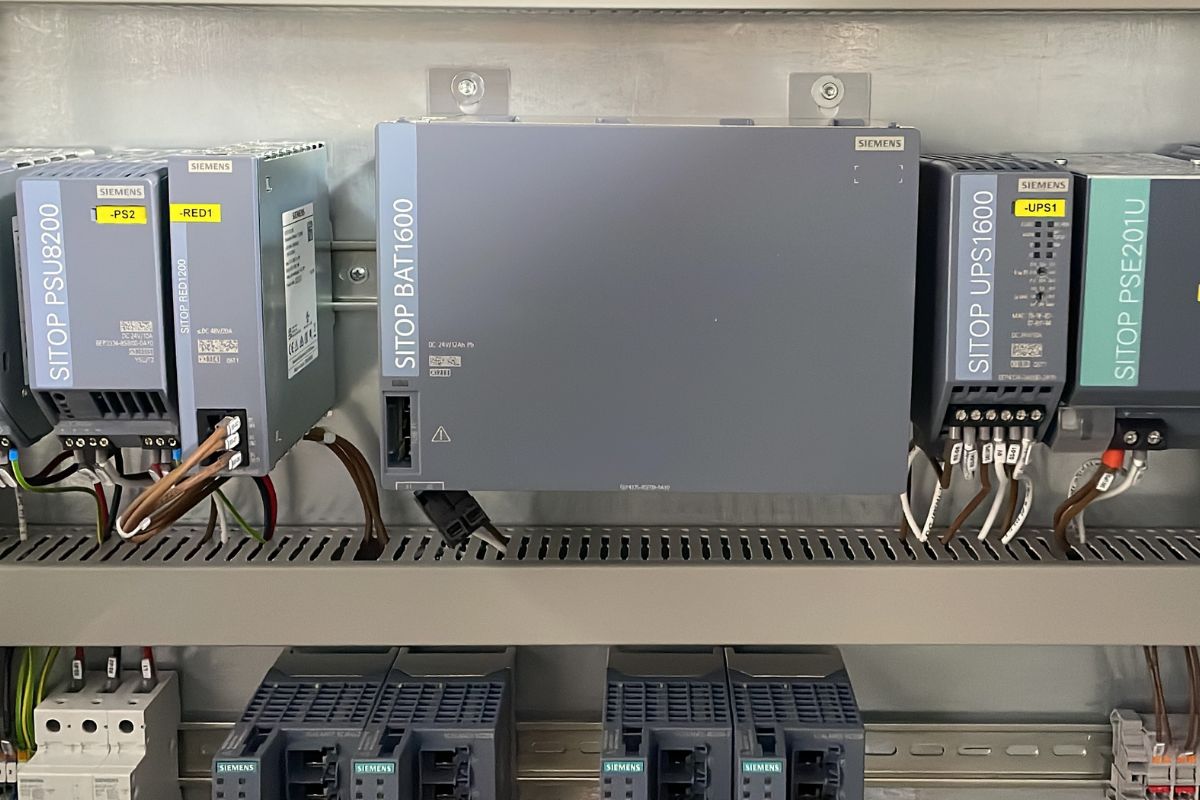
In our projects—especially for critical processes—ensuring uninterrupted power continuity is no longer something solved by a UPS alone. With dual power supplies, redundancy modules, and battery-backed structures, the system remains stable even during millisecond-level interruptions. Once, we implemented Siemens’ redundant power circuit in a project; we tested it in the field with dual independent feeds and a redundancy module. One power supply failed, yet the system didn’t drop for even a second.
Today, power supplies do far more than simply “provide electricity from a box”; they also offer maintenance planning and operational convenience. With load monitoring, status diagnostics, and digital communication, facilities can predict when downtime will occur and plan spare parts accordingly. Using standardized product families also ensures long-term system reliability. In short, the power supply is a small component inside the panel—but one that can save the entire system.
# SITOP PSU8200 # RED1200 # UPS1600 # BAT1600 # PSE201U